
5 Best Cannabis Microbial Products To Use During Flowering
Why microbial products matter during flowering
During flowering, plants require increased nutrients, particularly phosphorus and essential micronutrients. If you observe slow development, pale tops, or low density despite adequate feeding, the problem is often nutrient availability rather than quantity applied. To diagnose nutrient availability issues, begin by evaluating pH levels as imbalances can hinder nutrient uptake. Examine the root zone for signs of compaction or poor aeration that may impede effective absorption. Additionally, consider soil testing or leaf analysis to determine specific nutrient deficiencies, distinguishing them from environmental or pest-related problems. Armed with this diagnosis, microbial products can be judiciously applied to enhance nutrient uptake during critical flowering phases.
A plant inoculant, or microbial product, can address this issue. According to a recent article in the International Journal of Molecular Sciences, microbial biostimulants provide a sustainable way to improve plant growth and resilience, especially under challenging conditions like drought or extreme temperatures. (Ali et al., 2024) Because of these benefits, many growers are focusing on fostering a healthy root environment rather than just depending on high-phosphorus fertilizers during critical flowering stages. This guide highlights five microbial products suitable for flowering, beginning with Mammoth P.
Skip the blog and check out the products directly at GrowersHouse.com
Quick goal: how to “grow microbes” in the root zone during bloom
To promote microbial growth, follow these guidelines:
- Start applying microbial products at the onset of the flowering cycle and continue throughout, adhering to the specific timing recommended for each product. Regular applications, typically every one to two weeks, help ensure consistent benefits.
- Avoid using strong oxidizers/sanitizers within days of inoculant application.
- Keep root-zone conditions stable (temperature, moisture, oxygenation).
- Maintain consistency; regular application of beneficial microbes is more effective than sporadic dosing.
- If you use microbial tea, treat it as a supplement: ensure cleanliness, avoid mixing with harsh products, and apply it consistently.
Comparison chart
| Product | Microbial type | Best use in flowering | Best for | Why it compares to Mammoth P |
|---|---|---|---|---|
| Mammoth P Active Microbials | Bacterial consortium | Improving nutrient availability (especially P + micros) through flower | Soil, coco, hydro | Built specifically around microbe-driven nutrient availability and P mobilization support. |
| Impello Tribus Original | Rhizobacteria (PGPR) | All-cycle root-zone performance + nutrient availability through harvest | Soil, coco, hydro | Comparable “bacterial inoculant” approach for improving macro/micro availability in the root zone. |
| BioSafe TerraGrow | Beneficial bacteria + fungal spores (powder) | Root-zone resilience + nutrient availability during mid/late bloom | Soil, soilless, irrigation systems | Multi-organism inoculant designed to support nutrient release/availability and stress tolerance. |
| Botanicare Hydroguard | Bacillus bacteria (root inoculant) | Root-zone stability in demanding flowering conditions (especially hydro) | Hydro/recirculating, coco | Runs as a steady bacteria-based support product when bloom feeds and temps stress the root zone. |
| Orca Liquid Mycorrhizae | Endo mycorrhizae + beneficial bacteria | Uptake support + root system performance through bloom push | Soil, coco, hydro | Complements bacteria-driven availability with mycorrhizae for broader uptake support. |
1) Mammoth P Active Microbials (Top pick)
Mammoth P Active Microbials enables plants to access phosphorus during flowering without increasing EC levels. It delivers a targeted blend of beneficial bacteria that release bound phosphorus and micronutrients, optimizing existing nutrients in your feed. (Phosphorus: The Key to Plant Health and Yield, 2014)
Why it stands out
- Mammoth P functions as a phosphorus unlocker and micronutrient enhancer through its bacterial blend, providing more accessible nutrients to flowering plants.
- The GrowersHouse “Mammoth P nutrients guide” explains that Mammoth P is a phosphorus-mobilizing microbial inoculant that uses a consortium of beneficial bacteria to help unlock bound phosphorus and micronutrients—especially useful during flowering.
How does this help your flowering program
If you already use phosphorus fertilizer or a bloom base, Mammoth P helps convert more of it into available nutrients. This approach is more effective than increasing fertilizer strength alone. (Effect of organic biostimulants on cannabis productivity and soil microbial activity under outdoor conditions, 2023) With consistent use, growers can expect noticeable improvements, such as denser buds, lusher foliage, and an overall boost in plant vigor, leading to a more successful flowering phase.

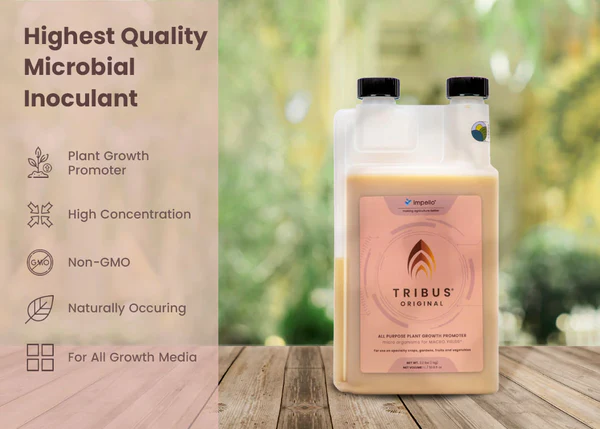
2) Impello Biosciences – Tribus Original (Seedling–Harvest Microbial Inoculant)
Tribus is a microbial inoculant formulated for root-zone colonization and improved nutrient availability, making it a strong alternative to Mammoth P.
Why it belongs on this list
- Tribus contains growth-promoting rhizobacteria that enhance nutrient uptake in all media types. Its compatibility with various fertilization strategies makes it versatile during flowering.
Why growers like it in flowering
Flowering can stress weak roots. Consistent use of a bacterial inoculant helps maintain a competitive and efficient rhizosphere, supporting both plants and microorganisms as phosphorus demand increases.
Best fit
- Ideal for growers seeking a reliable weekly inoculant effective from early bloom through harvest. For Tribus, apply 1 mL per gallon of water every week to maintain effective root-zone colonization and nutrient uptake. (Tribus Original Feed Chart, 2023) Ensure consistent coverage throughout the growing season to optimize plant health.
3) BioSafe Systems – TerraGrow Beneficial Soil Inoculant
TerraGrow is a powdered microbial inoculant that combines beneficial bacteria and fungi. Its formula stabilizes root zones and supports recovery during stressful flowering periods.
Why it’s a strong flowering microbe
- TerraGrow is a powdered blend of beneficial bacterial and fungal spores that improves soil characteristics, enhances plant stress tolerance, reduces transplant shock, and increases nutrient availability. (TerraGrow Liquid Achieves OMRI-Listing, 2023) It can also be applied through irrigation systems.
How does it play with bloom feeding
If you use a base bloom program and want to improve phosphorus performance, TerraGrow is a root-zone support inoculant that integrates easily into standard operating procedures, especially in soil and soilless irrigation systems.

4) Botanicare – Hydroguard Root Inoculant
Hydroguard supports root health in hydroponic systems by using a specific bacterium to stabilize root zones in environments prone to elevated temperatures or other risks.
Why is it popular during flowering
- Hydroguard contains a hydroponics-specific strain of Bacillus amyloliquefaciens that rapidly colonizes root zones and decomposes organic matter to maximize nutrient uptake.
When to choose it
- If you have experienced root-zone instability during mid or late flowering, Hydroguard serves as a reliable microbial product to help maintain nutrient performance for flowering plants.

5) Plant Success – Orca Concentrated Liquid Mycorrhizae
Orca combines liquid mycorrhizae and beneficial bacteria, making it suitable for growers seeking improved nutrient uptake and a diverse microbial profile in one application.
Why it belongs in a flowering list
- Orca is a highly concentrated product that combines four endomycorrhizal species with eleven beneficial bacterial strains.
Why does that matter in bloom?
- Mycorrhizae, or organic mycorrhizal fungi, help extend the functional root network. During flowering, this supports consistent nutrient uptake even as plant demand and environmental conditions fluctuate. (Arbuscular mycorrhizal fungi role in plant beneficial elements uptake and nutrient acquisition, 2025)

Cheat Sheet: pick the right microbial for your flowering run
Choose Mammoth P if…
You want a direct microbial solution to support phosphorus and micronutrient availability during flowering without increasing feed strength.
Choose Tribus if…
You want a consistent plant inoculant or PGPR approach from early flowering through harvest to ensure broad macro- and micronutrient availability.
Choose TerraGrow if…
You prefer powdered bacteria and fungi and prioritize stress tolerance and nutrient availability in irrigated systems.
Choose Hydroguard if…
You use hydroponic or recirculating systems and need a dependable bacterial inoculant to maintain root stability during flowering.
Choose Orca if…
You want a combination of mycorrhizae and bacteria, particularly for mycorrhizae soil mix applications.
FAQs
Do I need the highest phosphorus fertilizer (a nutrient additive specifically high in the element phosphorus, often labeled "P" on fertilizer packages) for big flowers?
Not always. High phosphorus levels may benefit some systems, but many issues stem from nutrient availability and uptake. Microbial support can improve the effectiveness of your existing bloom base and phosphorus fertilizer.
What’s a simple fertilizer for phosphorus strategy during flowering?
Use a balanced bloom base and add a microbial inoculant, such as Mammoth P, to enhance phosphorus availability, especially when targeting improved flowering and finish quality.
Can I combine these with a microbial tea?
Often yes, but maintain cleanliness and consistency. Do not mix teas with harsh sterilizers, and avoid combining multiple biological products unless you are monitoring results. Take note of compatible and incompatible products to prevent negative interactions. For instance, avoid mixing microbial teas with fungicides containing copper, as these can inhibit microbial activity. Additionally, when using nutrient brands, check labels or consult manufacturers to ensure they do not contain strong oxidizers or preservatives that may adversely affect microbe viability.
References
- Ali, S., Akhtar, M. S., Siraj, M. & Zaman, W. (2024). Molecular Communication of Microbial Plant Biostimulants in the Rhizosphere Under Abiotic Stress Conditions. International Journal of Molecular Sciences 25(22). https://doi.org/10.3390/ijms252212424
-
(2014). Phosphorus: The Key to Plant Health and Yield. Mammoth Ag.
Phosphorus: The Key to Plant Health and Yield
- (2023). Effect of organic biostimulants on cannabis productivity and soil microbial activity under outdoor conditions. Journal of Cannabis Research 5(1). https://doi.org/10.1186/s42238-024-00214-2
- (2023). Tribus Original Feed Chart. Impello Biosciences. https://cdn.shopify.com/s/files/1/0723/9450/6454/files/Tribus_Feed_Chart.pdf
-
(July 16, 2023). TerraGrow Liquid Achieves OMRI-Listing. BioSafe Systems.
TerraGrow® Liquid Achieves OMRI-Listing
- (2025). Arbuscular mycorrhizal fungi role in plant beneficial elements uptake and nutrient acquisition. Rhizosphere 35. https://doi.org/10.1016/j.rhisph.2025.101141