Compliance & Quality Assurance — Build an Audit-Ready Facility
Operating in a regulated cannabis market requires more than good cultivation practices — it demands a facility and team that are compliance-driven, quality-focused, and audit-ready from day one. At CannaCribs Consulting, we've worked in some of the world's most tightly regulated markets, supporting clients through GACP and EU-GMP certifications, government inspections, and third-party audits across North America, Europe, Asia, and beyond.
Compliance must be integrated into every aspect of facility design and daily operations. It is not a separate department — it is a company-wide mindset, a design philosophy, and an operational culture that must be built in from the first blueprint, not retrofitted after the first audit.
Get the Cannabis Facility Build Guide Toolkit
Everything from this series in one downloadable pack — Excel calculators, checklists, and a printed quick-reference card. Built by the team behind CannaCribs Consulting.
- 📊 10-Tab Excel Workbook
- 💰 Financial Model Calculator
- 📍 Site Selection Scorecard
- 💧 Fertigation Dryback Log
- ✅ Commissioning Checklist
- 🔒 Compliance Readiness
- 📄 Quick Reference Card
The Four Pillars of a Compliant Cannabis Operation
Compliance in commercial cannabis operates across four interconnected dimensions — each one necessary, none sufficient on its own:
Regulatory Alignment
Understanding and designing to every applicable rule — cultivation limits, license types, testing protocols, labeling laws, and local bylaws — from the outset rather than as an afterthought.
Traceability & Documentation
Seed-to-sale tracking, chain of custody records, batch documentation, and audit trails that are accurate, current, and accessible at every point in the production cycle.
Physical Design & Biosecurity
Facility layout that enforces clean/dirty separation, controlled access, and contamination prevention — making compliance the path of least resistance for every worker.
Culture of Quality
A team that understands why compliance requirements exist and is trained to uphold them consistently — not because they're watched, but because quality is part of the operation's identity.
Understanding Regulatory Requirements
Every jurisdiction — country, state, province, or municipality — has unique cannabis regulations. Compliance begins with a thorough, jurisdiction-specific understanding of the rules that govern your license type and production activities. A facility must be designed with a deep understanding of:
- Cultivation limits — canopy size, plant count, license type restrictions, and what activities each license authorizes
- Mandatory testing protocols — which analytes must be tested, at what frequency, and through which accredited labs
- Permissible pest and disease control products — approved substances, withholding periods, and application record requirements
- Packaging and labeling laws — required disclosures, child-resistant packaging standards, and marketing restrictions
- Local bylaws and community considerations — odor control requirements, traffic management, waste disposal, security infrastructure, and neighbor notification rules
CannaCribs Consulting ensures that facility layout, SOPs, and workflows are designed to align with both local and national requirements from the outset — not revised after a compliance gap becomes a violation.
Track & Trace: Compliance Embedded in Operations
Most regulated cannabis markets require a track and trace system to monitor cannabis from seed to sale. Common platforms include METRC, BioTrack, and jurisdiction-specific government systems. These systems require:
- Real-time tracking of plant movement, harvests, processing, and inventory
- Accurate chain of custody records at every transfer point
- Batch documentation that enables traceability in the event of a recall or audit
- Integration between physical workflows and digital recordkeeping so that traceability is maintained without creating operational friction
The facility layout and team SOPs must match the logic of the track and trace system — poorly designed workflows create compliance gaps that show up as discrepancies in audits. CannaCribs designs both physical spaces and operational processes to make traceability accurate and efficient simultaneously.
Batch Release & Testing Readiness
Before cannabis products are released for sale or processing, they must pass batch release testing. The cultivation program, IPM strategy, and post-harvest processes must all be designed with testing requirements as a hard constraint — not an afterthought.
| Test Category | What's Tested | Design Implication |
|---|---|---|
| Microbial | Mold, yeast, E. coli, Salmonella, total aerobic count | Drives biosecurity protocols, HVAC pressurization, sanitation scheduling, and drying environment design |
| Pesticide residue | Hundreds of individual compounds including prohibited substances | Requires approved IPM product list, withholding period tracking, and application recordkeeping in SOPs |
| Heavy metals | Lead, cadmium, arsenic, mercury | Drives water source selection, substrate sourcing standards, and input material vetting protocols |
| Mycotoxins | Aflatoxins, ochratoxin A | Requires post-harvest drying and storage conditions that prevent mold development during cure |
| Potency & terpenes | THC, CBD, CBG, CBN, terpene profiles | Informs cultivar selection, environmental strategy, and harvest timing decisions |
| Moisture / water activity | % moisture content, water activity (Aw) | Drives dry room design, target dryback cycles, and vault storage setpoints |
GACP and EU-GMP Compliance
For facilities targeting European export markets or pharmaceutical-grade production, GACP (Good Agricultural and Collection Practices) and EU-GMP (Good Manufacturing Practices) certification represent the highest standard of regulated cannabis compliance. These frameworks require a level of documentation, validation, and operational discipline that goes well beyond basic domestic license requirements.
CannaCribs Consulting has:
- Designed and operated facilities fully compliant with GACP and EU-GMP standards
- Supported clients through audits from regulatory agencies and international certifying bodies
- Developed complete documentation systems — Site Master Files, validation plans, sanitation logs, deviation records, CAPA (Corrective and Preventive Action) procedures, training records, and SOP libraries
- Documented procedures and validations — every critical process has a written procedure; every piece of equipment has qualification documentation
- Training programs with records — all staff trained to their role-specific SOPs, with records of training dates and competency assessments
- Designated clean and dirty zones — physical separation enforced by design, not just policy
- Controlled access and gowning protocols — documented entry procedures, gowning rooms, and access logs for controlled areas
- Batch records — complete, accurate, and contemporaneous records for every production batch from seed to finished product
- Change control systems — any change to processes, equipment, or environments is documented, assessed, and approved before implementation
- Risk management documentation — HACCP or risk-based approaches to identifying and controlling quality risks
Facility Hygiene & Biosecurity
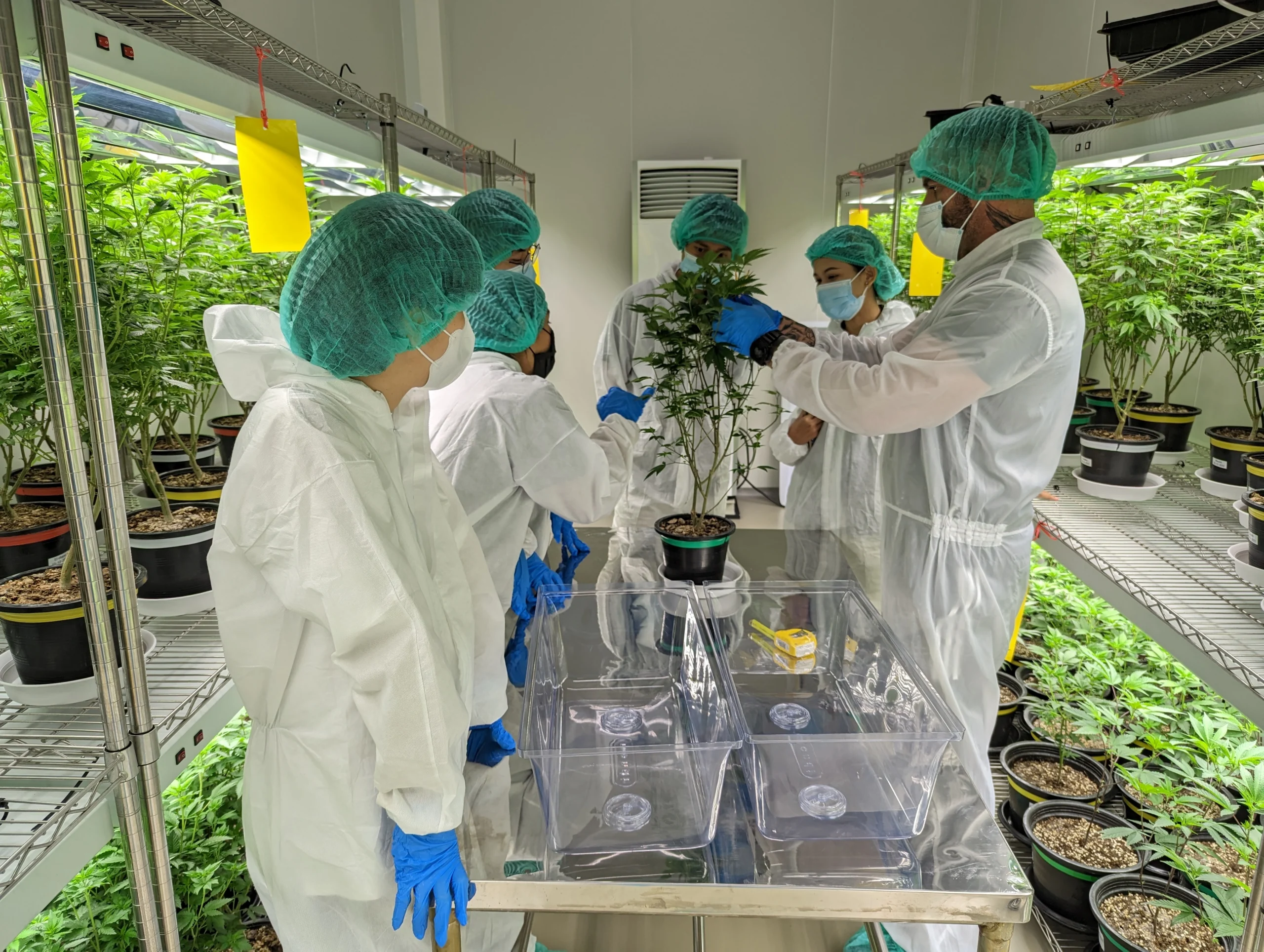
Preventing pest and disease outbreaks is simultaneously a quality issue and a compliance issue. A pest outbreak that requires an emergency application of a non-compliant product — or produces contaminated flower that fails testing — creates both a product loss event and a potential regulatory violation. The design of the facility is the first line of defense.
CannaCribs Consulting's approach includes:
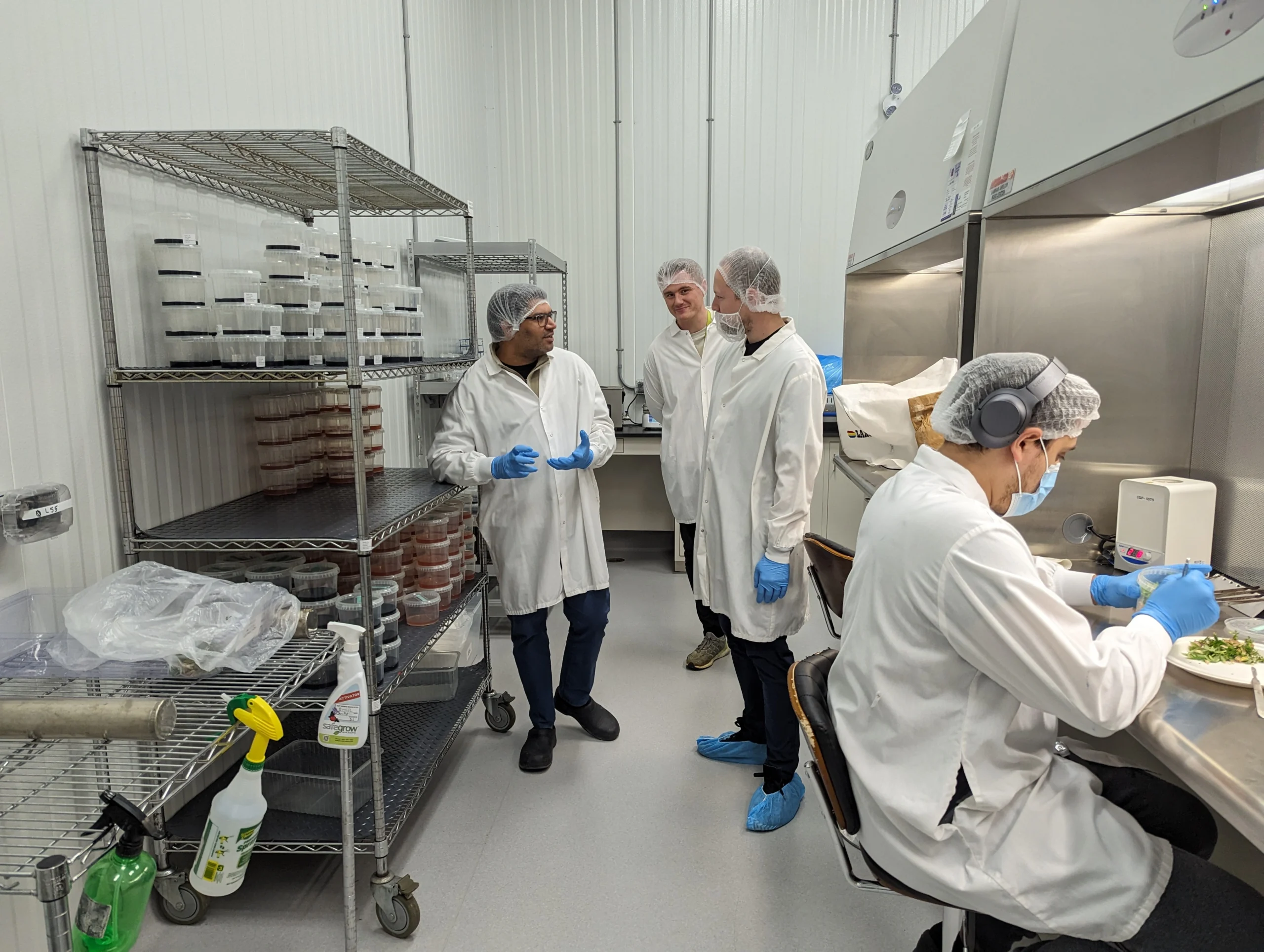
- Physical separation of clean and dirty zones — material flow, people flow, and waste flow all designed to prevent cross-contamination between zones
- Dedicated sanitation and gowning rooms — integrated into the facility layout rather than improvised from spare space
- Controlled airflows and pressurization strategies — positive pressure in clean zones, negative pressure in harvest and post-harvest areas, HEPA filtration where required
- Scheduled room cleaning protocols — written SOPs specifying agents, frequencies, methods, and recordkeeping for every zone
- Pest exclusion and monitoring systems — physical barriers at entry points, yellow sticky traps, scouting schedules, and early detection protocols before an issue becomes an infestation
These design elements are essential for maintaining a compliant growing environment and dramatically reducing the risk of product loss, test failures, or enforcement actions.

Culture of Quality & Continuous Improvement
Compliance ultimately rests on people. Every piece of documentation, every validated procedure, and every biosecurity protocol is only as effective as the team member executing it at 6am on a Tuesday. Building a culture of quality — where every team member from trimmers to facility managers understands and respects the role of quality systems — is what separates operations that pass audits from those that pass audits and then struggle with repeat findings.
What CannaCribs Builds Into Your Team
- SOP training programs — customized to your facility, your processes, and your regulatory requirements; not generic templates repurposed from other industries
- Competency assessments — verifying that training was effective, not just attended
- Deviation and CAPA systems — structured processes for capturing when something goes wrong, investigating root causes, and implementing corrective actions that prevent recurrence
- Integrated QA/QC checkpoints — quality decisions embedded into daily workflows rather than performed at the end of a batch by a separate team
- Audit-ready documentation habits — teams trained to document contemporaneously and accurately, so records reflect reality rather than being reconstructed after the fact
Compliance should be part of the facility's operational DNA. When everyone understands why the rules exist and how to uphold them, it creates a safer, more efficient, and more successful operation — and one that generates consistent, test-passing product that builds market reputation over time.

Download the Build Guide Toolkit
Financial model, setpoints reference, site scorecard, dryback log, commissioning checklist, and compliance readiness — all in one Excel workbook + Word quick-reference card.
- 🌡 Environmental Setpoints
- 💡 PPFD & DLI Calculator
- 🪴 Dry Room Sizing Tool
- 🌱 Clone KPI Tracker
- 🔒 Pre-Audit Checklist
Cannabis compliance requirements differ significantly by state. CannaCribs Consulting offers market-specific regulatory guidance and compliance program design in:
Q&A Section
GACP (Good Agricultural and Collection Practices) applies to the cultivation and primary processing of medicinal cannabis. It governs the growing environment, harvest procedures, initial processing steps (drying, curing), and the documentation of these activities. GACP is the baseline standard for entering EU pharmaceutical supply chains as a cultivator.
EU-GMP (Good Manufacturing Practices) applies to the manufacturing of pharmaceutical products — including cannabis extracts, oils, and other processed forms — and increasingly to the packaging and release of dried flower for pharmaceutical use in some markets. GMP requires a higher level of process validation, equipment qualification, and quality management system infrastructure than GACP alone.
Operations targeting both cultivation and processing for EU export typically need both certifications. CannaCribs Consulting has supported facilities through both frameworks and designs production systems to meet the more rigorous requirements from the outset.
METRC (Marijuana Enforcement Tracking Reporting Compliance) is a seed-to-sale tracking system used by many US states to monitor cannabis from cultivation through retail sale. Each plant, package, and transfer requires a RFID tag and real-time data entry into the METRC system.
Facility design affects METRC compliance in several concrete ways: computer stations or tablet mounting points must be accessible at key workflow locations (harvest stations, processing areas, intake/transfer points) so staff can tag and record without disrupting workflow. Harvest and processing areas must be designed to allow batch separation to be maintained physically, not just documented. Storage areas must be organized in a way that matches METRC's inventory structure. Poor facility design makes METRC compliance time-consuming and error-prone; good design makes it a seamless part of daily operations.
The difference between compliant-on-paper and compliant-in-practice comes down to three things: training quality, leadership behavior, and system design.
- Training quality: SOPs must be written for the people who will execute them — clear, specific, and testable. Training should verify understanding through demonstration, not just signature on a training log.
- Leadership behavior: When managers skip documentation steps or accept deviations without recording them, teams learn that compliance is optional under pressure. When leadership treats every deviation as a learning opportunity rather than a punishment trigger, staff are more likely to report honestly.
- System design: Compliance systems that are easy to use get used. Systems that are complex or time-consuming create workarounds. The best facilities design their workflows so that doing the compliant thing is also the easiest thing.
The most common causes of cannabis test failures are:
- Microbial failures: caused by waterlogged root zones, poor dry room conditions (too high humidity or too little airflow early in the dry), inadequate room sanitation between cycles, or cross-contamination during trim. Prevention requires proper HVAC design, biosecurity protocols, and rigorous sanitation SOPs.
- Pesticide failures: caused by using prohibited substances, exceeding approved application rates, or failing to observe withholding periods before harvest. Prevention requires a state-approved IPM product list, strict application recordkeeping, and pre-harvest testing protocols.
- Moisture failures: caused by packaging product before it has fully reached water activity (Aw) below 0.65. Prevention requires properly designed and controlled dry and cure rooms, with calibrated monitoring equipment.
- Heavy metals failures: typically caused by contaminated substrate, water source, or input materials. Prevention requires sourcing documentation, water testing, and substrate supplier qualification.
The consistent theme: every test failure has a design or process root cause. CannaCribs Consulting designs cultivation programs and facility systems to eliminate those root causes rather than rely on testing to catch problems after they occur.
Related


