
Flowering Phase — Turn Structure into Revenue
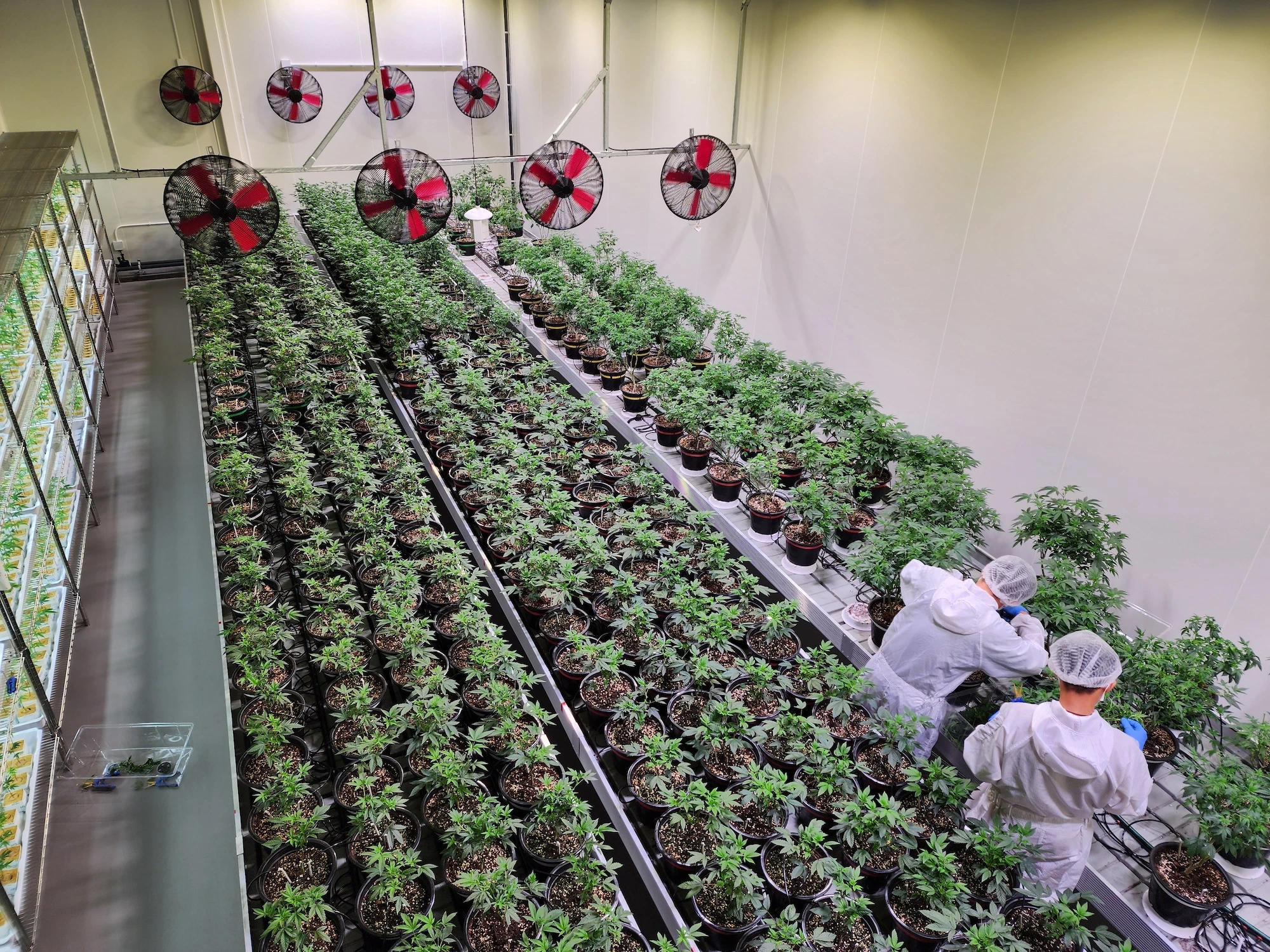
The flowering phase is the final and most critical part of the cannabis production cycle — where vegetative growth ends and flower development, cannabinoid production, and overall quality take center stage. Everything built during site design, veg room management, nutrient programs, and irrigation strategy converges here. The flowering room is where investment becomes revenue.
At CannaCribs Consulting, we design flowering rooms to support each stage of development while enabling cultivators to fine-tune environmental and lighting strategies to bring out the best in each cultivar. A well-designed flowering environment, paired with a strong data feedback loop, allows cultivators to dial in their process over time — achieving consistent, high-quality results with every harvest.

Get the Cannabis Facility Build Guide Toolkit
Everything from this series in one downloadable pack — Excel calculators, checklists, and a printed quick-reference card. Built by the team behind CannaCribs Consulting.
- 📊 10-Tab Excel Workbook
- 💰 Financial Model Calculator
- 📍 Site Selection Scorecard
- 💧 Fertigation Dryback Log
- ✅ Commissioning Checklist
- 🔒 Compliance Readiness
- 📄 Quick Reference Card
Three Phases of Flowering
CannaCribs breaks the flowering cycle into three distinct phases — each with its own physiological priorities and environmental targets. Managing flowering as a single static period is one of the most common yield and quality limiters in commercial operations.
Stretch & Transition
Plants still focused on vegetative expansion. Completing stretch, establishing optimal Leaf Area Index (LAI), and transitioning into reproductive growth. This phase sets the canopy structure for everything that follows.
Rapid Bud Development
Canopy development complete. Flower sites fully formed. Goal: maintain strong photosynthetic rates and stable conditions for maximum bud development. The highest energy demand phase of the crop.
Resin & Quality
Vegetative growth stopped. Energy shifts fully to flower bulking, resin production, and secondary metabolite synthesis. This phase determines visual appeal, potency, and aromatic profile.
Environmental Strategy: Dynamic, Not Static
Temperature and humidity targets must evolve across the flowering cycle. Running a single static setpoint from day 1 to harvest is a design choice that compromises either early-phase growth rate or late-phase quality — or both. The approach CannaCribs recommends: manage based on 24-hour average temperature and RH, and adjust targets as the crop progresses through each phase.
| Phase | Temp Target | RH Target | Rationale |
|---|---|---|---|
| Early Flower (days 1–21) | 26–28°C (79–82°F) | 60–70% | Slightly higher temp and humidity promote metabolism, canopy expansion, and fast stretch completion |
| Mid Flower (days 22–49) | 24–26°C (75–79°F) | 50–60% | Stable conditions optimized for photosynthetic efficiency and rapid bud development; begin reducing humidity to limit disease risk as canopy density increases |
| Late Flower / Ripening (day 50+) | 20–24°C (68–75°F) | 40–50% | Lower temp and humidity support resin production, enhance terpene concentration, and prevent Botrytis in dense, heavy buds |
Early in the cycle, higher temps and humidity promote metabolism and expansion. Late in the cycle, reducing both supports resin development and prevents microbial issues in the dense floral tissue. This is not a dramatic overnight change — it's a gradual progression that requires environmental systems capable of making week-by-week setpoint adjustments reliably.

Lighting Intensity, Spectrum, and Strategy
Light is the engine of growth in a flowering room — and cannabis can tolerate far higher intensities than most horticultural crops. Getting lighting strategy right during flower directly determines yield, secondary metabolite production, and energy efficiency.
DLI Ramp-Up Strategy
Target maximum Daily Light Integral (DLI) as early as possible in the cycle, but increase slowly and observe plant response. Signs of light stress — bleaching at the top of canopies, taco-leafing, slowed growth — are the cues to slow the ramp-up. Rushing to maximum intensity without monitoring plant response is a reliable way to introduce stress that affects the entire crop.
For most indoor cannabis in mid to late flower, target PPFD of 900–1,200+ µmol·m⁻²·s⁻¹ at canopy level. Some genetics with documented high-light tolerance can benefit from intensities above 1,500 µmol·m⁻²·s⁻¹ — but verify with a specific cultivar before pushing that range across an entire room.
Spectrum Strategy
Spectrum composition during flowering affects both yield and quality. CannaCribs recommends fixtures that support:
- White light for structural growth and overall photosynthetic efficiency
- Red/orange (600–700 nm) for flowering induction and cannabinoid production — the primary driver of bud development
- Far-red (700–800 nm) for plant signaling, shade avoidance response, and end-of-day extension effects that can influence flowering speed
- UV (280–400 nm) at controlled doses for resilience building, trichome development, and potential terpene and cannabinoid enhancement
Photoperiod and Advanced Strategies
The 12 hours on / 12 hours off photoperiod is the industry standard for flowering induction and maintenance. Advanced growers experiment with modifications — longer dark periods in early flower to accelerate flowering initiation, or slightly shorter nights in late flower to maintain metabolic activity. These strategies are cultivar-dependent and require careful testing before implementing at scale. Not all genetics respond positively, and mistakes here affect an entire room's production cycle.
Under-Canopy Lighting
Install under-canopy LED bars where facility economics support it. Lower bud sites that would otherwise produce larf become viable, harvestable A-grade flower — improving yield per plant and reducing lollipopping labor. See the Under Canopy Lighting Video Breakdown for detailed setup guidance.
CO₂ Supplementation During Flowering
Cannabis is highly responsive to elevated CO₂. Maintaining 1,000–1,200 ppm during daylight hours significantly increases photosynthetic capacity and growth rate, especially when paired with high light intensities and adequate nutrition. The benefit compounds with intensity — CO₂ enrichment without adequate light produces minimal improvement; paired with 1,000+ µmol PPFD, the growth rate impact is substantial.
CO₂ supplementation is especially critical in sealed or tightly controlled environments where natural air exchange is limited. In more open facilities with frequent air changes, CO₂ may be diluted before plants can fully utilize it — system design and room sealing must be evaluated before investing in enrichment infrastructure.
Safety requirements: CO₂ enrichment systems must include gas detectors, emergency ventilation, and visible safety signage. Maintain CO₂ within the operational range only during light periods — elevated CO₂ in dark periods provides no plant benefit and increases asphyxiation risk for staff.
Irrigation and Fertigation During Flowering
Irrigation management during flowering is not a set-and-forget system. Water and nutrient demand changes dramatically from stretch through ripening, and irrigation strategy must evolve alongside the plant.
- Early flower (stretch): water demand is high as the plant is still producing biomass rapidly. Maintain container capacity reach with adequate P2 duration and 30–50% overnight dryback.
- Mid flower: demand remains high; precision irrigation with tight EC and pH monitoring becomes critical as bud development accelerates. P2 duration reaches its maximum.
- Late flower / ripening: water demand decreases as vegetative growth stops. P2 shortens; some cultivators implement controlled water stress to concentrate secondary metabolites. Only apply intentional drought stress with real-time substrate monitoring — blind water stress risks crop damage.
On automation vs. grower intuition: Tools for monitoring substrate EC, pH, and saturation are widely available and valuable. CannaCribs encourages growers to develop strong observational skills and "grower sense" first — understanding what a healthy plant looks like before relying on sensors to tell them. Technology should enhance decision-making, not replace it.

Infrastructure Considerations for Flowering Rooms
Facility design choices made before first plants enter a flowering room determine what's operationally possible throughout the crop. Several infrastructure factors directly affect crop management efficiency:
Table Design
Narrow tables — ideally no more than 4 feet wide — allow staff to access all plants for scouting, pruning, defoliation, and support installation without overreaching. Wider tables restrict access and reduce crop work efficiency dramatically at scale.
Trellis Netting
Essential for plant support as flowers develop weight. Trellis systems also help train and flatten the canopy, optimizing light penetration and airflow through the flowering zone. Single or double trellis depending on plant architecture and desired canopy height.
Canopy Monitoring Tools
LAI (Leaf Area Index) meters or canopy imaging help quantify structure and optimize timing for defoliation or pruning. Knowing when the canopy is too dense to allow adequate airflow and light penetration — rather than guessing — leads to better-timed crop work decisions.
Grower Optimization and Data Feedback Loops
Every cultivar behaves differently under light, temperature, and nutrient regimes. What works for one genetic in one facility may not transfer directly to a different cultivar, a different grow medium, or a different environmental system. This is why building structured feedback loops into the cultivation program is as important as the physical facility design.
CannaCribs encourages growers to:
- Use data collection tools — environmental sensors, irrigation monitoring, tissue analysis, run-off EC/pH — to track crop response cycle over cycle
- Adjust variables systematically rather than simultaneously, so the impact of each change can be isolated and evaluated
- Train teams to observe, describe, and log phenotypic responses to lighting, climate changes, and crop work events
- Document what worked, what didn't, and why — creating an institutional knowledge base that doesn't walk out the door with individual growers
A well-designed flowering environment paired with a strong feedback loop is what separates operations that improve cycle over cycle from those that repeat the same results indefinitely. The room is the tool — the feedback system is what makes the tool get sharper over time.
Connecting to State-Specific Markets
Flowering room strategy isn't universally applicable — cultivar selection, terpene market preferences, testing requirements, and regulatory limits on certain IPM inputs all vary by jurisdiction. CannaCribs Consulting designs flowering programs calibrated to your specific market and regulatory environment.

Download the Build Guide Toolkit
Financial model, setpoints reference, site scorecard, dryback log, commissioning checklist, and compliance readiness — all in one Excel workbook + Word quick-reference card.
- 🌡 Environmental Setpoints
- 💡 PPFD & DLI Calculator
- 🪴 Dry Room Sizing Tool
- 🌱 Clone KPI Tracker
- 🔒 Pre-Audit Checklist
Flowering room strategy, approved inputs, and terpene market targets vary by state. CannaCribs offers state-specific cultivation consulting in:
Q&A Section
Early, mid, and late flower each have distinct physiological priorities that require different environmental management:
- Early flower (days 1–21): stretch completion, canopy expansion, and Leaf Area Index establishment. Higher temps (26–28°C) and humidity (60–70%) support rapid biomass development.
- Mid flower (days 22–49): maximum bud development with peak water and nutrient demand. Stable conditions at 24–26°C and 50–60% RH optimize photosynthetic rate.
- Late flower (day 50+): resin production, secondary metabolite synthesis, and quality determination. Lower temps (20–24°C) and humidity (40–50%) concentrate terpenes and prevent Botrytis.
Managing all three as a single environment means optimizing for one at the expense of the others. Dynamic management across all three phases is what top-performing operations do differently.
The standard target for cannabis flowering rooms is 1,000–1,200 ppm during light-on periods. This range significantly increases photosynthetic capacity compared to ambient CO₂ (~420 ppm), particularly when paired with high PPFD (900+ µmol·m⁻²·s⁻¹) and adequate nutrition. The benefit of CO₂ enrichment scales with light intensity — it's most impactful at higher PPFD levels.
CO₂ should only run during lit periods. Dark period CO₂ enrichment provides no plant benefit and increases asphyxiation risk for staff working in the room. All CO₂ enrichment systems require integrated gas detectors, emergency ventilation, and clear safety signage per developing NFPA 420 standards.
Defoliation timing in flowering is cultivar-dependent and should be informed by actual canopy density data rather than calendar dates. Common defoliation events:
- At flip (day 0–3): light defoliation of large fan leaves that will be shaded out anyway, improving early airflow
- During stretch (days 7–14): targeted removal of leaves that are blocking lower bud site development and airflow paths
- Pre-bulk (days 21–28): LAI-informed defoliation to achieve target canopy structure before the most intensive bud development begins
- Avoid late flower defoliation (past day 35–40) as it stresses plants during their highest energy demand period and risks reducing yield
The goal is optimized light penetration and airflow — not removing leaves for the sake of it. Over-defoliation is a common mistake that reduces photosynthetic capacity at the most critical phase of development.
Irrigation strategy must evolve alongside the three phases of flowering:
- Early flower: water demand is high as plants are still producing biomass. Maintain consistent container capacity reach with 30–50% overnight dryback; P2 duration is near its maximum from the veg room carry-over.
- Mid flower: peak water demand; precision irrigation timing is most critical as bud development is at its most intense. Monitor daily and adjust P2 duration based on morning moisture levels.
- Late flower: demand decreases as vegetative growth stops. P2 shortens; some operations implement controlled water stress (substrate EC increases slightly, moisture targets lower) to concentrate secondary metabolites. Only apply intentional stress with real-time substrate monitoring and clear targets.
The consistent principle: reach container capacity at P1, maintain through P2, and allow 30–50% dryback during P3. What changes is how long P2 needs to run at each phase — driven by actual plant demand, not a fixed schedule.
Related


