
CannaCribs Video Breakdown

Advanced Drip Irrigation Techniques for Cannabis Cultivation [Video Breakdown]

By May 18, 2026No Comments
CannaCribs Video Breakdown

Advanced Drip Irrigation Techniques for Cannabis Cultivation

[Video Breakdown]

Darren Kaplan from the CannaCribs Horticultural Consulting team breaks down the fundamentals of irrigating commercial cannabis — cutting through the buzz around precision irrigation and crop steering to focus on what actually determines crop quality: container capacity, dryback strategy, pot-to-plant sizing, and the three-phase irrigation framework that keeps root zones healthy at any scale.

Key Takeaways
  • Getting irrigation right can be the difference between a poor-quality crop and a good-quality crop.
  • Cannabis prefers a drier root zone between irrigation events compared to most horticultural crops.
  • "Overwatering" is usually waterlogging — staying at or near container capacity too long — which drives low root-zone oxygen, Pythium/Fusarium pressure, and reduced nutrient uptake.
  • The goal: irrigate completely to container capacity (to runoff), then allow sufficient dryback (30–50%) before the next cycle begins.
  • Match pot size to plant size and growth stage — too small risks missed irrigation; too large causes extended wetness and waterlogging conditions.
  • A practical container irrigation strategy is organized as P1 (reach capacity), P2 (extend/maintain), and P3 (dryback window).
  • Dryback can be tracked with lift-and-feel, a kitchen scale, or volumetric moisture sensors — even uncalibrated sensors are useful for tracking trends.
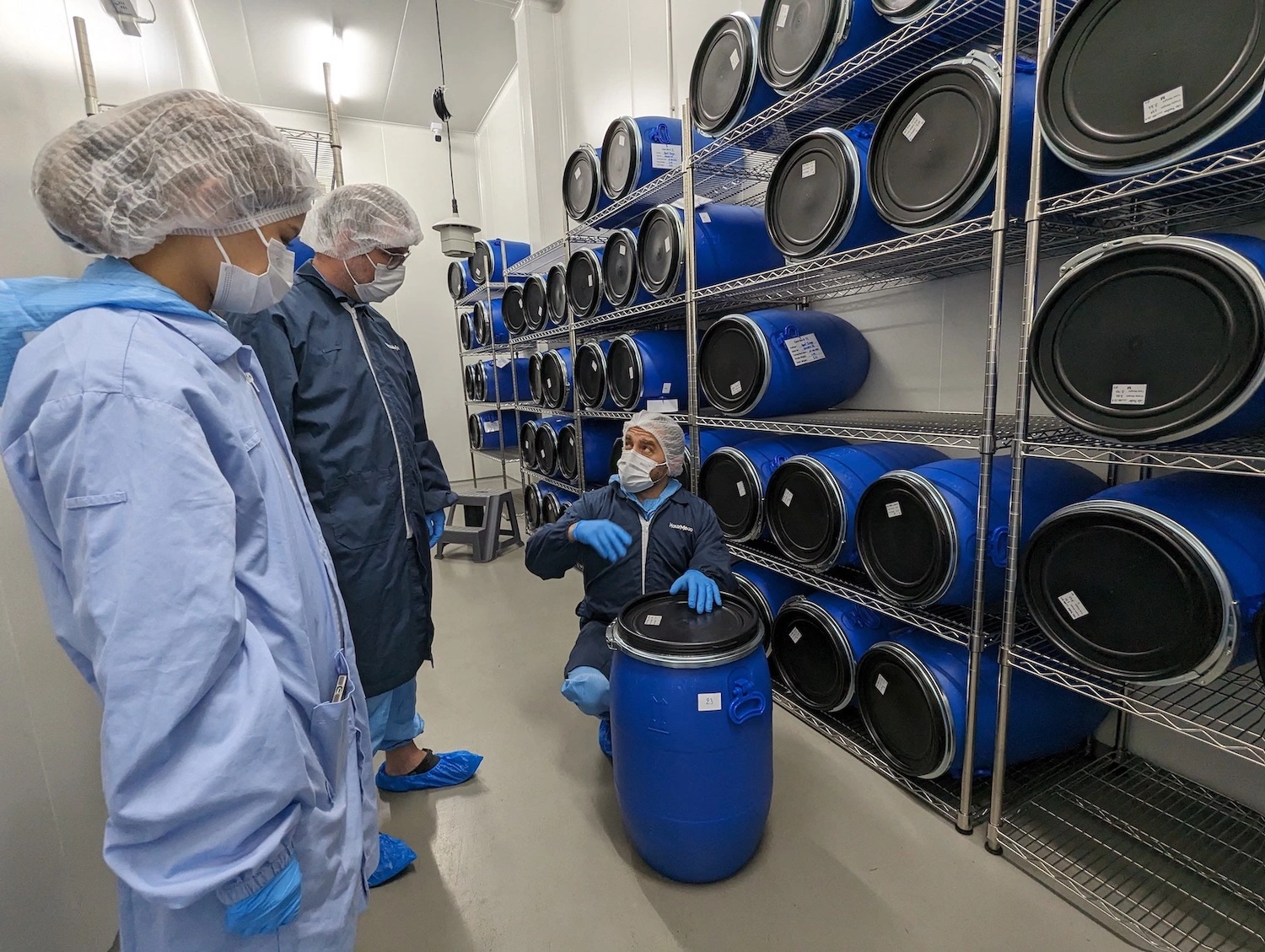
Cannabis cultivation containers and pots being used in a commercial grow operation — pot sizing is foundational to dryback strategy
Pot sizing is not a secondary concern — it's a primary irrigation decision. A plant that can't dry back its container at least once daily is a plant at risk for waterlogging, regardless of what else you're doing right.

Why Irrigation Fundamentals Come First

There's a lot of information in the cannabis industry about precision irrigation, crop steering, and drought stress — but Darren focuses on fundamentals because fundamentals drive consistent quality. The most important thing to understand first: cannabis, compared to other horticultural crops, likes a dry root zone between irrigation events.

Waterlogging vs. Overwatering: What's Actually Happening

The terms "overwatering" and "underwatering" are often confusing because they get tied to irrigation volume and frequency in ways that obscure the real issue. The concept that matters is waterlogging.

Container capacity is the maximum amount of water a pot or cube holds after complete saturation and full drain-off — the most water you can have in the root zone after runoff. If you maintain that amount of moisture for an extended period, you get waterlogging: low root-zone oxygen, elevated pathogen pressure (Pythium, Fusarium), and reduced nutrient uptake. It doesn't matter how good your environment or nutrients are — a waterlogged root zone will compromise your crop.

The goal: irrigate completely to container capacity (confirmed by runoff), then allow a sufficient dryback so roots can breathe and the plant benefits from the dry root zone conditions it prefers.

Match Pot Size to Plant Size

Before you can build a dryback strategy, you need the right container size. If a large plant is in a small pot, it'll use the water very quickly, requiring very frequent irrigation — operationally demanding, and high-risk if any irrigation is missed. If the pot is too large, the plant won't pull enough moisture overnight, and waterlogging conditions persist. The goal is to choose a container that allows at least one full dryback to your target moisture content every single day.

The P1/P2/P3 Three-Phase Irrigation Framework

For simplicity, container irrigation for cannabis can be broken into three phases:

Phase 1 — P1: Reach Container Capacity

Start 30–60 minutes after lights-on, after transpiration has begun — always transpiration before irrigation. Apply multiple small pulses (shots) until the pot reaches container capacity, confirmed by observing runoff.

Phase 2 — P2: Maintain & Extend

Apply maintenance pulses every 30–60 minutes during active transpiration to extend time at container capacity. The end of P2 is timed to allow the target dryback before the next day's P1. Apply a leaching fraction of 5–20% (irrigating slightly beyond minimum container capacity) to ensure even saturation across all plants and help manage substrate EC.

Phase 3 — P3: Dryback Window

From the last P2 irrigation through overnight until the next morning's P1. Target a 30–50% moisture loss from container capacity. Adjust the start of P3 (= end of P2) so that each morning's P1 always begins at your target moisture level. This is the window that prevents waterlogging and maintains the dry root zone conditions cannabis requires.

Healthy cannabis plant with strong root zone in a commercial fertigation system — result of correct container sizing and dryback strategy
A well-managed dryback cycle — 30–50% overnight, hitting container capacity cleanly each morning — produces the vigorous, well-structured root zone that feeds this kind of plant health and yield potential.

Dryback Targets, Media Limits, and Common Mistakes

The 30–50% dryback target is a wide range, and the right point within it depends on growth stage, cultivar, and cultivation method. Both ends carry risk:

  • Too wet: Never fully drying out means waterlogging risk persists, even if you're technically hitting container capacity
  • Too dry: Pushing 50%+ means some plants in the room are going even further — and certain media (Rockwool especially) can be very difficult to re-saturate once they get too dry, permanently reducing the water they can hold for the rest of the crop

Coco is more forgiving — it allows a lower moisture level and still re-saturates well. Rockwool requires more careful management of the dryback ceiling. As long as you're somewhere in the 30–50% range with a full dryback every day, you're already doing quite well.

As Plants Grow, P2 Grows With Them

After transplant, roots are underdeveloped and plants won't use all the moisture in the pot overnight — there may be several days where no irrigation is needed at all. When you first see a dryback to 30–50%, that's when P2 timing becomes relevant. As plants grow and use more water, extend P2 (add more shots, or space them over a longer window) to maintain container capacity during peak transpiration. As plants enter late flowering and slow their water uptake, P2 duration decreases. The morning moisture level at P1 is always the feedback signal driving P2 duration.

How to Measure Dryback

Three approaches, depending on your resources:

  • Lift and feel: After irrigating to container capacity (runoff confirmed, wait 30 min), lift the pot and memorize the weight. Each morning, lift and aim for 50–70% of that full weight.
  • Scale method: Weigh the pot at container capacity. Calculate your target weight (50–70% of full). Weigh each morning and irrigate when you hit that number.
  • Volumetric moisture content sensors: Placed in the media, these give continuous readings. Calibrate to your media, pot size, and position if possible — but even uncalibrated sensors are valuable for tracking dryback trends over time. If the starting moisture at P1 keeps declining, your media is losing capacity — a sign you've been drying it too aggressively.

Drip Stake Setup: Avoiding Channeling

How you administer irrigation affects whether you actually reach container capacity or just create a bypass channel from emitter to drain:

  • Use at least two drip stakes per plant for pots of half a gallon or larger to ensure even saturation across the media surface
  • Don't push stakes fully in — leave 40–50% of the stake exposed at the top to prevent channeling that starts halfway down the media
  • Use slow, controlled flow rates — high flow rates cause water to run straight through without saturating the media properly
  • Water breakers saturate from the top evenly, but sacrifice precision; drip stakes offer precision but require correct placement and flow rate management
Cannabis fertigation monitoring equipment showing moisture content, EC, and pH readings in a commercial cultivation operation
Whether using lift-and-feel, a scale, or volumetric moisture sensors, tracking the morning moisture level at the start of P1 is the single most important feedback loop in container irrigation management.
Full Video Transcript

Advanced Drip Irrigation Techniques for Cannabis Cultivation — Darren Kaplan, CannaCribs Horticultural Consulting.

[00:00:00]

Hi, I'm Darren Kaplan from the CannaCribs Horticultural Consulting team, and today we're here to share some concepts that we discuss and implement to help commercial cannabis growers operate as efficiently and successfully as possible. Making the right irrigation decision can make the difference between a poor-quality and a good-quality crop — if you've been growing for months or years, you know that to be true. Today we're going to talk about the fundamentals of irrigating cannabis.

[00:00:25]

There's a lot of information out there in the industry about precision irrigation, crop steering, drought stress — but I'm going to focus today just on the fundamentals. The first most important thing to consider is that cannabis, compared to other horticultural crops, likes a dry root zone. It likes to have its roots relatively dry between irrigation events.

[00:00:46]

An important concept to understand is waterlogging. You often hear about overwatering and underwatering — that can be confusing because it can be linked to the volume of irrigation you apply and the number of times you irrigate. Container capacity is the amount of water your cube or pot can hold after it's been completely irrigated to saturation and allowed to drain off completely. That's the most water you can have in your root zone after runoff. If you maintain that amount of water in your root zone for an extended period of time, you can start seeing waterlogging. Overwatering is often a misnomer for waterlogging.

[00:01:21]

If your substrate is wet for a long period of time, that's waterlogging. You start running into issues with low root-zone oxygen, high incidence of root-zone pathogens like Pythium and Fusarium, and reduced nutrient uptake. Cannabis is very sensitive to these things. If you maintain your substrate at a high moisture content or waterlogged for extended periods of time, you're going to run into issues with crop quality and yield — and it doesn't matter what else you're doing in terms of environment or fertilizer rates. You're going to have problems.

[00:01:55]

The ultimate goal is to irrigate your plants completely — reach that container capacity, ideally once a day (could be more) — and allow a sufficient dryback between irrigations so that the roots have time to dry out and the cannabis plants can perceive the benefits of the dry root zone. We're looking for adequate irrigation and adequate drybacks between irrigation.

[00:02:19]

The first step is to match your pot size with your plant size and the growth stage. If your plant is very big in a small pot, it's going to use water very quickly and you'll have to irrigate very frequently — which is operationally challenging. Still acceptable, but if you miss an irrigation you're at high risk of crop failure. If the pot is too large, the plant won't pull up enough moisture overnight and you'll have waterlogging conditions.

[00:03:14]

For simplicity, I'm going to break down the irrigation strategy into three phases — P1, P2, P3. Phase 1 is your first irrigation of the day — it can involve multiple pulses or shots to reach container capacity. You're looking to reach container capacity starting 30 minutes to an hour after lights are on and plants have begun to transpire. Remember: transpiration before irrigation.

[00:04:00]

Phase 2 is used to extend the period of container capacity. We're applying pulses — could be every half an hour or an hour. The idea is that the timing of the end of P2 allows for sufficient dryback until the next P1. When you're hitting container capacity, you're hitting it to runoff. To account for variability across plants, irrigate 10–15% more than needed to just hit container capacity — we call that the leaching fraction. Maintain between 5 and 20% depending on how much EC control you need.

[00:05:11]

Phase 3 is the period from the last P2 irrigation all the way to the first P1 irrigation. We like to see a dryback of 30 to 50% over the rest of the day, overnight, and to the beginning of P1. From container capacity, total moisture content decreases 30–50% during P3. That avoids waterlogging and maintains the dry conditions cannabis prefers. The range is wide — if you're somewhere between 30 and 50%, you're already doing quite well.

[00:06:12]

Why not always hit the bigger 50% dryback? The risk: if some plants are having a 50% dryback, others in your crop might be going even further. Some growing media — Rockwool, for example — once it hits really low moisture levels, it's hard to re-saturate. You run into issues of not being able to hit container capacity at P1 and P2 the next day, and that might last for the duration of the crop. Balance drybacks with the capacities of your growing media. Coco is more forgiving; it allows you to get drier and still return to container capacity.

[00:07:13]

After transplant, roots are not fully developed — there might be several days where you don't have to irrigate at all. When you start seeing that first dryback to 30–50%, that's when you have to start thinking about P2 timing. As plants grow, you extend P2 by another hour, then another, responding to the morning moisture content. You keep increasing P2 duration as plants grow and use more water — until they start to finish flowering and you'll see you don't need to increase P2 anymore, and may even need to bring it back.

[00:08:12]

How do you measure moisture content? The lift-and-feel method: irrigate to container capacity, wait 30 minutes, lift the plant — you know what fully saturated feels like. Aim to bring that weight down 30–50% by morning. If you have a scale, that's even better — weigh at container capacity, set a target morning weight. Or use volumetric moisture content sensors, which give accurate moisture readings when calibrated to your media, pot size, and placement. Even uncalibrated sensors are useful for tracking dryback trends over time.

[00:10:47]

Don't get too dry with media like Rockwool because you reduce the amount of water you can maintain in that media going forward. Maintaining field capacity is incredibly important. If you're irrigating with a water breaker, you fully saturate from the top. If you're using drip stakes, you can irrigate more precisely — but depending on where drippers are located and how many, you might leave the top of the growing media completely dry. Use at least two stakes for pots half a gallon or larger.

[00:11:24]

If you're using emitters with too high a flow rate, you start running into channeling — water flows through the pot and runs straight to drain without saturating the media. A slow, controlled irrigation approach with drippers is the best way to fully saturate growing media and hit container capacity without channeling. If using drip stakes, make sure they're not overly pushed in — leave 40–50% of the top of the stake sticking out so you don't get channeling starting halfway down the media.

[00:12:03]

If you're interested in having CannaCribs Consulting assist in designing, building, or optimizing your facility, please fill out the intake form in the description below. Even if your operation is running well, we can be a sounding board for fine-tuning your facility, educating your team, or streamlining your processes. We work worldwide and our team consults in five different languages.